Author: moebergeron

  • John 1:9-13

    John 1:9-13

    John 1:9–13 continues the majestic prologue of John’s Gospel, transitioning from the testimony of John the Baptist to the arrival of the true Light into the world. These verses describe the tragic rejection and the astonishing gift offered through the Incarnation: the right to become children of God. This passage captures both the darkness of human unbelief and the glory of divine grace, offering a concise theology of salvation rooted in divine initiative and Christ-centered faith.


    “The true light, which gives light to everyone, was coming into the world. He was in the world, and the world was made through him, yet the world did not know him. He came to his own, and his own people did not receive him. But to all who did receive him, who believed in his name, he gave the right to become children of God, who were born, not of blood nor of the will of the flesh nor of the will of man, but of God.”
    (John 1:9–13, ESV)


    John 1:9 — “The true light, which gives light to everyone, was coming into the world.”

    Cross References:

    • Isaiah 49:6 – “I will make you as a light for the nations, that my salvation may reach to the end of the earth.”
    • John 8:12 – “I am the light of the world. Whoever follows me will not walk in darkness…”
    • 1 John 2:8 – “…the true light is already shining.”

    The phrase “true light” contrasts Christ with all lesser lights, including the witness of John the Baptist. “True” does not mean “genuine” as opposed to “false” but rather “ultimate,” “complete,” or “perfect” in divine revelation. Christ is the full illumination of God’s glory and truth.

    The expression “gives light to everyone” is best understood in the context of general and special revelation. The true Light shines universally in the sense that Christ is the only source of spiritual truth and life for all humanity. This does not imply universal salvation, but rather that every person must reckon with the Light.

    Typologically, this fulfills Isaiah 9:2 — “The people who walked in darkness have seen a great light.” Jesus is not merely for Israel but is God’s Light to the nations (Isaiah 42:6), the universal Redeemer.


    John 1:10 — “He was in the world, and the world was made through him, yet the world did not know him.”

    Cross References:

    • Colossians 1:16 – “For by him all things were created…”
    • Romans 1:21 – “For although they knew God, they did not honor him as God…”
    • Acts 17:24–27 – “Yet he is actually not far from each one of us.”

    Here is the paradox of the Incarnation: the Creator enters His creation, and yet the creation fails to recognize Him. “The world” (used three times) refers not to the physical cosmos alone, but to humanity in rebellion, the organized system opposed to God.

    “Did not know him” implies more than ignorance—it suggests relational rejection. This echoes the Fall in Genesis, where humanity suppresses the truth of God. The darkness did not overcome the Light (v.5), but it refused to acknowledge it.

    Theologically, this rejection reveals the depth of human depravity. Even when God takes on flesh, man does not recognize Him without divine intervention.


    John 1:11 — “He came to his own, and his own people did not receive him.”

    Cross References:

    • Isaiah 53:3 – “He was despised and rejected by men…”
    • Romans 9:4–5 – “To them belong the adoption, the glory, the covenants…”
    • Matthew 23:37 – “O Jerusalem… How often would I have gathered your children together…”

    This verse narrows the rejection: not only was the world blind to the Word, but Israel—His covenant people—rejected Him. The first phrase, “He came to His own,” refers to the land and people of promise. The second, “His own people,” makes the tragedy personal and covenantal.

    Here is covenant rejection: the very people to whom the promises were given (Abrahamic, Mosaic, Davidic) fail to receive the promised Messiah. This fulfills Isaiah 1:3 – “Israel does not know, my people do not understand.”

    Yet even this rejection was anticipated and woven into redemptive history. Christ is the stone the builders rejected (Psalm 118:22), but also the cornerstone of the new temple.


    John 1:12 — “But to all who did receive him, who believed in his name, he gave the right to become children of God,”

    Cross References:

    • Galatians 3:26 – “For in Christ Jesus you are all sons of God, through faith.”
    • Romans 8:16 – “The Spirit himself bears witness… that we are children of God.”
    • 1 John 3:1 – “See what kind of love the Father has given to us, that we should be called children of God…”

    In contrast to the majority rejection, there is a remnant who receive Him—those who believe in His name. “Receiving” Christ is not a vague spiritual sentiment, but an active faith commitment to His person and work. To believe in His name means to trust all that He is—His character, authority, and mission.

    The astonishing result: He gave them the right to become children of God. The term “right” speaks of legal authority—this is a divinely granted status, not a human achievement. This is the language of adoption, a major New Testament theme, denoting an unbreakable relationship with the Father through the Son.

    This verse transitions from rejection to regeneration—from judgment to new birth, setting up the theological ground for the next verse.


    John 1:13 — “who were born, not of blood nor of the will of the flesh nor of the will of man, but of God.”

    Cross References:

    • John 3:3 – “Unless one is born again he cannot see the kingdom of God.”
    • James 1:18 – “Of his own will he brought us forth by the word of truth…”
    • Ephesians 2:4–5 – “…even when we were dead in our trespasses, made us alive together with Christ…”

    Here is the foundation of salvation: it is not from natural descent (“not of blood”), human desire (“nor of the will of the flesh”), or human effort or decision (“nor of the will of man”), but is entirely of God.

    This verse teaches the monergistic nature of the new birth—it is a sovereign act of God, not a cooperative effort. Human lineage, effort, or determination cannot produce a child of God. Only God gives new life, through the Spirit and the Word (John 3:5).

    This is not merely theological precision—it is gospel assurance. If our new birth is rooted in God’s will, it is secure and unshakable. This is the doctrine of regeneration—the new creation by the Spirit that precedes and enables faith.


    Summary for Discipleship & Teaching

    John 1:9–13 moves from universal illumination to personal salvation. Christ, the Light, comes into the world, offering life and truth, yet He is tragically rejected—especially by His covenant people. But to those who receive Him by faith, He grants the highest privilege imaginable: to be children of God.

    This passage teaches that salvation is not a human achievement but a divine gift, rooted in the Incarnation and the sovereign grace of God. For disciples, it calls us to humility and gratitude. For teaching, it presents a rich theology of conversion, adoption, and regeneration, firmly centered on Christ.

    Here we find the tension and beauty of the gospel: rejected by many, received by few, given freely by God—and in Him, we are made sons and daughters of the living God.


    Outline: John 1:9–13 (ESV)
    The following information is intended for preparation.

    Scripture (ESV):

    9 The true light, which gives light to everyone, was coming into the world.
    10 He was in the world, and the world was made through him, yet the world did not know him.
    11 He came to his own, and his own people did not receive him.
    12 But to all who did receive him, who believed in his name, he gave the right to become children of God,
    13 who were born, not of blood nor of the will of the flesh nor of the will of man, but of God.


    1. The Light Comes to the World (v. 9)

    • “The true light, which gives light to everyone” — Jesus is the genuine source of spiritual truth and understanding.
      • 📖 Cross Reference: John 8:12 — “I am the light of the world.”
    • “Was coming into the world” — Refers to the incarnation of Christ.
    • Key Idea: Jesus brings divine light to all people.
    • Key Words:true lightgives lightcoming into the world

    2. The Rejection of the Word (vv. 10–11)

    • “The world was made through him” — Christ is the Creator of all.
      • 📖 Cross Reference: Hebrews 1:2 — “through whom also he created the world.”
    • “Yet the world did not know him” — Creation failed to recognize its Maker.
    • “His own people did not receive him” — Israel, though chosen, rejected Him.
    • Key Idea: Though He made the world and came to His own, Jesus was rejected.
    • Key Words:made through himdid not knowdid not receive

    3. The Privilege of Believing (vv. 12–13)

    • “To all who did receive him… he gave the right to become children of God” — Faith in Christ brings the legal and spiritual privilege of adoption.
    • “Who believed in his name” — Trusting in the person and work of Jesus.
    • “Born… of God” — Spiritual rebirth is God’s work, not human effort.
      • 📖 Cross Reference: John 3:5–6 — “Unless one is born of water and the Spirit…”
    • Key Idea: Receiving and believing in Christ results in becoming God’s child.
    • Key Words:receivebelievechildren of Godborn… of God

  • John 1:1-5

    John 1:1-5

    John 1:1–5 stands as one of the most profound openings in all of Scripture. These verses form the prologue of the Gospel of John and set the theological foundation for understanding the person of Jesus Christ—eternally divine, the agent of creation, and the source of light and life. This passage reaches back to Genesis and brings forward the full revelation of God in Christ. Every word is rich with meaning, revealing the identity of Jesus as the eternal Word (Logos), not merely as a teacher or prophet, but as God Himself.


    “In the beginning was the Word, and the Word was with God, and the Word was God. He was in the beginning with God. All things were made through him, and without him was not any thing made that was made. In him was life, and the life was the light of men. The light shines in the darkness, and the darkness has not overcome it.”
    (John 1:1–5, ESV)


    John 1:1 — “In the beginning was the Word, and the Word was with God, and the Word was God.”

    Cross References:

    • Genesis 1:1 – “In the beginning, God created the heavens and the earth.”
    • Hebrews 1:2 – “…through whom also he created the world.”
    • Revelation 19:13 – “He is clothed in a robe dipped in blood, and the name by which he is called is The Word of God.”

    This verse deliberately echoes Genesis 1, placing Jesus at the dawn of all things—not as a created being, but as co-eternal with the Father. “The Word” (Logos) is not a concept but a person, distinct from yet fully one with God. In Hebrew thought, the Word of God was His powerful self-expression in creation, revelation, and salvation. In Greek philosophy, the Logos represented divine reason or order. John elevates both traditions by declaring that this Logos is personal and divine—Jesus Christ.

    This is not mere poetry. It is a declaration of eternal pre-existenceco-existence, and divine essence. “Was” implies continuous existence. The phrase “was with God” suggests both intimate fellowship and distinction, while “was God” declares full deity without qualification.

    The type and shadow from Genesis becomes fulfilled in Jesus. Where God created by speaking (“And God said…”), John now tells us that the divine Word is a person through whom all was made.

    John 1:2 — “He was in the beginning with God.”

    Cross References:

    • Proverbs 8:27–30 – “When he established the heavens, I was there…”
    • Colossians 1:17 – “And he is before all things, and in him all things hold together.”

    The repetition emphasizes Jesus’ eternal presence with God before time began. The divine Word is not an impersonal force or emanation but a personal being who was eternally in fellowship with God the Father. The distinction and unity are preserved.

    John 1:3 — “All things were made through him, and without him was not any thing made that was made.”

    Cross References:

    • Psalm 33:6 – “By the word of the LORD the heavens were made…”
    • 1 Corinthians 8:6 – “…through whom are all things and through whom we exist.”
    • Colossians 1:16 – “For by him all things were created…”

    Creation is not merely attributed to the Father, but mediated through the Son. This affirms Christ’s role not only in redemption but in creation itself. The clause “without him was not any thing made” underscores His exclusive agency—nothing in the created order exists apart from His work. There is no middle ground. He is not a creature; He is the Creator.

    Theologically, this positions Jesus as the second Adam and greater than Moses or the prophets. All things originate and are sustained through Him. This speaks to both cosmic and redemptive authority.

    John 1:4 — “In him was life, and the life was the light of men.”

    Cross References:

    • Genesis 2:7 – “…breathed into his nostrils the breath of life…”
    • John 5:26 – “For as the Father has life in himself, so he has granted the Son also to have life in himself.”
    • John 8:12 – “I am the light of the world. Whoever follows me will not walk in darkness…”

    Christ is the source of life—both physical and spiritual. The life He possesses is not derivative but self-existent, a divine attribute. This life becomes the “light of men,” a metaphor indicating truth, holiness, and revelation.

    From a redemptive-historical perspective, Jesus fulfills what Adam failed to do. Adam brought death; Christ brings life. The tabernacle and temple were symbols of God’s presence and light—now fully realized in Christ who tabernacles among us (v.14).

    John 1:5 — “The light shines in the darkness, and the darkness has not overcome it.”

    Cross References:

    • Isaiah 9:2 – “The people who walked in darkness have seen a great light…”
    • 2 Corinthians 4:6 – “For God…has shone in our hearts to give the light of the knowledge of the glory of God in the face of Jesus Christ.”
    • John 3:19 – “…light has come into the world, and people loved the darkness rather than the light…”

    The present tense “shines” denotes continual action—the light of Christ is actively confronting the darkness of a fallen world. “Darkness” often symbolizes ignorance, sin, and spiritual blindness. The phrase “has not overcome it” can also mean “has not understood it,” reflecting the dual idea of opposition and incomprehension.

    The triumph of the light over darkness is eschatological and redemptive. Though the darkness fights against the light (seen in the rejection of Jesus), it cannot extinguish it. Christ is both the light and the victor.


    Summary for Discipleship & Teaching

    This passage roots our understanding of Christ not in Bethlehem, but in eternity. He is the eternal Creator, the source of life, the giver of light. His coming into the world is not plan B—it is the climactic fulfillment of all God’s promises. For discipleship, this calls for worship, reverence, and trust. If Christ is the Word, then we must listen. If He is life and light, then we must follow. If He is Creator, then all things—including our salvation—are from Him and for Him.

    These verses set the stage for the Gospel narrative: the eternal Word enters into history, shining into the darkness to bring life and light to the world.


    Handout for the student: John 1:1–5 (ESV)

    Read all of John’s Gospel at least 1 time.
    Read all of chapters 1-3 two or more times.

    The following information is intended for preparation.

    Scripture (ESV):

    1 In the beginning was the Word, and the Word was with God, and the Word was God.
    2 He was in the beginning with God.
    3 All things were made through him, and without him was not any thing made that was made.
    4 In him was life, and the life was the light of men.
    5 The light shines in the darkness, and the darkness has not overcome it.


    1. The Eternal Word (vv. 1–2)

    • “In the beginning was the Word” — The Word (Jesus) existed before creation began.
      • 📖 Cross Reference: Genesis 1:1 — “In the beginning, God created…”
    • “The Word was with God” — Shows distinction and relationship within the Godhead.
    • “The Word was God” — Affirms the full deity of the Word.
    • Key Idea: Jesus is eternal and divine.
    • Key Words:beginningWordGod

    2. The Word as Creator (v. 3)

    • “All things were made through him” — Jesus is the agent of all creation.
      • 📖 Cross Reference: Colossians 1:16 — “by him all things were created…”
    • “Without him was not any thing made that was made” — Nothing exists apart from His creative work.
    • Key Idea: Christ is the source of all creation.
    • Key Words:all thingsmade through him

    3. Life and Light in the Word (vv. 4–5)

    • “In him was life” — Jesus is the source of spiritual and eternal life.
      • 📖 Cross Reference: John 11:25 — “I am the resurrection and the life”
    • “The life was the light of men” — His life brings understanding and truth to humanity.
    • “The light shines in the darkness” — His light actively works against spiritual darkness.
    • “The darkness has not overcome it” — Evil cannot defeat His light.
    • Key Idea: Jesus brings life that defeats darkness.
    • Key Words:lifelightdarknessovercome
  • John 1:6-8

    John 1:6-8

    John 1:6–8 introduces John the Baptist as the divinely commissioned forerunner to Christ, the Light of the world. His mission is not to draw attention to himself but to bear witness to the One who is eternal, divine, and redemptive. This section of John’s Gospel roots John the Baptist’s ministry not only in the immediate narrative but in Old Testament prophecy, particularly from Malachi, the final voice of the Hebrew Scriptures. John the Baptist is not a mere transitional figure—he is the last prophet of the old covenant and the herald of the new.


    “There was a man sent from God, whose name was John. He came as a witness, to bear witness about the light, that all might believe through him. He was not the light, but came to bear witness about the light.”
    (John 1:6–8, ESV)


    John 1:6 — “There was a man sent from God, whose name was John.”

    Cross References:

    • Malachi 3:1 – “Behold, I send my messenger, and he will prepare the way before me…”
    • Luke 1:76 – “And you, child, will be called the prophet of the Most High…”
    • Matthew 11:10 – “This is he of whom it is written, ‘Behold, I send my messenger before your face…’”

    This verse introduces a new character in the drama of redemption—a man, not eternal like the Word, but sent by God. This divine commissioning fulfills the prophecy of Malachi 3:1, where God promises to send a messenger ahead of Him. John is that messenger, the bridge between the Testaments, and the last in the line of Old Testament prophets.

    The name “John” (meaning “Yahweh is gracious”) is itself a testimony of God’s merciful intention to redeem. His coming marks the end of prophetic silence and the beginning of the final phase of God’s redemptive work through Christ.

    In typological terms, John is the new Elijah—the preparatory voice of repentance and restoration, as prophesied in Malachi 4:5–6:

    “Behold, I will send you Elijah the prophet before the great and awesome day of the LORD comes. And he will turn the hearts of fathers to their children…”

    Jesus confirms this fulfillment in Matthew 11:14 and Luke 1:17, noting that John comes in the spirit and power of Elijah, not in bodily form, but in prophetic function.


    John 1:7 — “He came as a witness, to bear witness about the light, that all might believe through him.”

    Cross References:

    • Isaiah 43:10 – “You are my witnesses,” declares the LORD…
    • John 5:33 – “You sent to John, and he has borne witness to the truth.”
    • Acts 19:4 – “John baptized with the baptism of repentance, telling the people to believe in the one who was to come after him…”

    The purpose of John’s mission is clear: he came to bear witness. This legal and prophetic term underscores his role in God’s covenantal economy—not as a redeemer, but as a truth-teller, a herald of divine revelation. His voice is a call to faith, not in himself, but in the Light—Jesus Christ.

    The repetition of the word “witness” is intentional. In Jewish law, valid testimony required two or three witnesses (cf. Deuteronomy 19:15). John stands as one of the great God-ordained witnesses to the Messiah, preparing the world for the Light’s arrival.

    The end of his witness is that “all might believe through him.” John’s ministry had an evangelistic purpose. The belief spoken of here is not intellectual assent but saving trust in Christ. John is instrumental in calling hearts to repentance (Malachi 4:6) and preparing them to receive the grace and truth that comes in Christ.


    John 1:8 — “He was not the light, but came to bear witness about the light.”

    Cross References:

    • John 3:28 – “I am not the Christ, but I have been sent before him.”
    • Luke 3:15–16 – “John answered them all, saying, ‘I baptize you with water, but he who is mightier than I is coming…’”
    • Acts 13:25 – “What do you suppose that I am? I am not he.”

    This verse decisively distinguishes John from the Christ. In a world easily tempted to elevate charismatic figures, the Gospel author makes it clear: John is not the Light. His greatness lies in his clarity of purpose and self-effacing testimony. He understood his calling was not to generate light, but to reflect and reveal it.

    In typological contrast, whereas Moses’ face reflected the glory of God, John points beyond even prophetic glory to the incarnate Light Himself. The Light is not derivative or symbolic—it is personal, divine, and salvific in Christ.


    Fulfilled Prophecy from Malachi

    1. Malachi 3:1 – “Behold, I send my messenger…”
      Fulfilled in John’s preparatory ministry. He prepares the way for “the Lord… the messenger of the covenant”, namely Jesus.
    2. Malachi 4:5–6 – “I will send you Elijah the prophet…”
      Fulfilled in John coming in the spirit and power of Elijah (Luke 1:17). His ministry of calling hearts to repentance fulfills the mission to turn hearts and avoid judgment.

    John’s ministry functions as both a warning and a mercy—calling Israel back to covenant faithfulness and preparing them for the visitation of God in the flesh. As such, he fulfills the final voice of the Old Testament canon and heralds the dawn of the new covenant.


    Summary for Discipleship & Teaching

    John the Baptist teaches us what faithful witness looks like: humble, Christ-exalting, and rooted in Scripture. He reminds us that even those with a divine calling are not the source, but only pointers to the source.

    For disciples, this passage instills a model of gospel humility and Scripture-shaped ministry. John is the fulfillment of ancient prophecy, yet his greatness lies in pointing to Christ. His witness stands as a testimony that all of God’s promises—old and new—find their “Yes” in Jesus.

    God does not act randomly in redemptive history. From Malachi to John the Baptist to Christ, every move is intentional, prophetic, and grace-filled. As we reflect on John 1:6–8, we see a faithful witness who prepares the way for the Light, the Messiah, who alone gives life to the world.


    Outline: John 1:6–8 (ESV)
    The following information is intended for preparation.

    Scripture (ESV):

    6 There was a man sent from God, whose name was John.
    7 He came as a witness, to bear witness about the light, that all might believe through him.
    8 He was not the light, but came to bear witness about the light.


    1. The Mission of John (v. 6)

    • “There was a man sent from God” — John’s role and authority came from God, not man.
      • 📖 Cross Reference: Malachi 3:1 — “Behold, I send my messenger…”
    • “Whose name was John” — Refers to John the Baptist, the forerunner of Christ.
    • Key Idea: John was divinely appointed to prepare the way.
    • Key Words:sentfrom GodJohn

    2. The Role of Witness (v. 7)

    • “He came as a witness” — John’s purpose was to testify about someone greater.
    • “To bear witness about the light” — His message pointed to Jesus, the true light.
    • “That all might believe through him” — His testimony aimed to lead people to faith.
      • 📖 Cross Reference: John 3:28 — “I am not the Christ, but I have been sent before him.”
    • Key Idea: John’s testimony was meant to lead others to faith in Christ.
    • Key Words:witnesslightbelieve

    3. Clarifying Identity (v. 8)

    • “He was not the light” — John himself was not the source of divine truth.
    • “But came to bear witness about the light” — His mission was always to point to Christ, not to himself.
      • 📖 Cross Reference: Acts 19:4 — “John baptized with the baptism of repentance, telling the people to believe in the one who was to come after him…”
    • Key Idea: John’s identity and purpose were distinct from Jesus.
    • Key Words:not the lightbear witness

  • Radical Transformation

    Radical Transformation

    Three years they had sat under Jesus’ teaching. They watched Him heal, they listened as He taught in parables, they witnessed His death and resurrection. But it was not until the Spirit descended upon them that the veil lifted, and the full meaning of Jesus’ life, death, and resurrection came into focus.

    What the Spirit Revealed

    Acts chapter 3 offers a glimpse into this new clarity. Peter and John go up to the temple at the hour of prayer, and there they encounter a man lame from birth. Peter says to him, “Silver and gold I do not have, but what I have I give you: In the name of Jesus Christ of Nazareth, get up and walk!” (Acts 3:6, BSB). And the man, never having walked before, rises to his feet, walking and leaping and praising God. But as marvelous as the miracle is, it is Peter’s sermon that follows which reveals just how much the apostles now understood.

    He speaks with a new confidence—not just boldness in tone, but depth in insight. He proclaims to the crowd that it was not by their own power or godliness that the man was healed, but through faith in the name of Jesus. And not only that, Peter explains that this Jesus whom they had handed over and denied before Pilate was, in fact, “the Author of life,” whom God raised from the dead (Acts 3:15, BSB). That phrase alone—“the Author of life”—reveals that Peter now grasped the eternal nature of Christ. The man he once confessed as Messiah (yet misunderstood in so many ways) he now proclaims as the eternal Son of God, the source of all life.

    Then Peter turns their attention to the prophets, declaring that everything that had happened—Christ’s suffering, His rejection, His resurrection—was foretold. “In this way God fulfilled what He had foretold through all the prophets, saying that His Christ would suffer” (Acts 3:18, BSB). He speaks as one who has begun to truly see the unity of Scripture. It is not just that Christ fulfills prophecy in a general sense, but that the entire sweep of redemptive history points to Him.

    And so Peter calls the people to repentance: “Repent, then, and turn back, so that your sins may be wiped away, that times of refreshing may come from the presence of the Lord” (Acts 3:19, BSB). Here is a man who has known his own denial of Christ, who has experienced both the bitter grief of sin and the gracious restoration of the Savior. And now, filled with the Spirit, he calls others into that same grace.

    There is something quietly astonishing about the transformation of Peter. He who once rebuked Jesus for speaking of His death now proclaims that very death as the centerpiece of God’s plan. He who fled in fear now stands firm before the crowds. What made the difference? The coming of the Holy Spirit. At Pentecost, the Spirit of God brought not just power, but understanding. The Spirit opened the Scriptures to them, and with it, opened their eyes to the majesty of Christ.

    I wonder how this passage speaks to you. Have you, like the apostles, walked with Jesus yet struggled to see His glory clearly? Are there places where your understanding of Him still feels partial or dim? The Spirit who opened Peter’s mouth and heart is the same Spirit given to every believer. He delights to reveal Christ to us—not as a distant figure in history, but as the risen Lord who stands at the center of all Scripture and the very center of our lives.

    Let us not move too quickly past Peter’s call: “Repent…that times of refreshing may come.” Refreshing! How often our souls grow dry when we forget the living Christ. But He is still the Author of life, still mighty to save, and still calling us to return and be renewed in His presence.

    For further reflection, consider these complementary passages: Luke 24:44–49, where the risen Jesus opens the minds of His disciples to understand the Scriptures; and John 14:26, where He promises the Spirit will teach and remind them of all He has said.

    Tags: Acts 3, Holy Spirit, Peter’s Sermon, Jesus the Messiah, Repentance and Refreshing, Pentecost Power

  • Godly Silence

    Godly Silence

    Our words have great power—to build up or tear down, to heal or harm. But there are moments when the wisest and most godly response is silence. Scripture calls us to exercise restraint and discernment, recognizing that there are times when keeping our mouths closed honors God, protects others, and guards our own hearts.

    Scripture
“Understand this, my dear brothers and sisters: You must all be quick to listen, slow to speak, and slow to get angry.” – James 1:19 (NLT)

    Reflection
The wisdom of James 1:19 speaks directly to our tendency to speak too quickly and without thought. In a world that prizes self-expression and instant responses, the discipline of silence can feel countercultural. Yet, it is often in silence that we demonstrate humility, patience, and trust in God’s timing and justice.

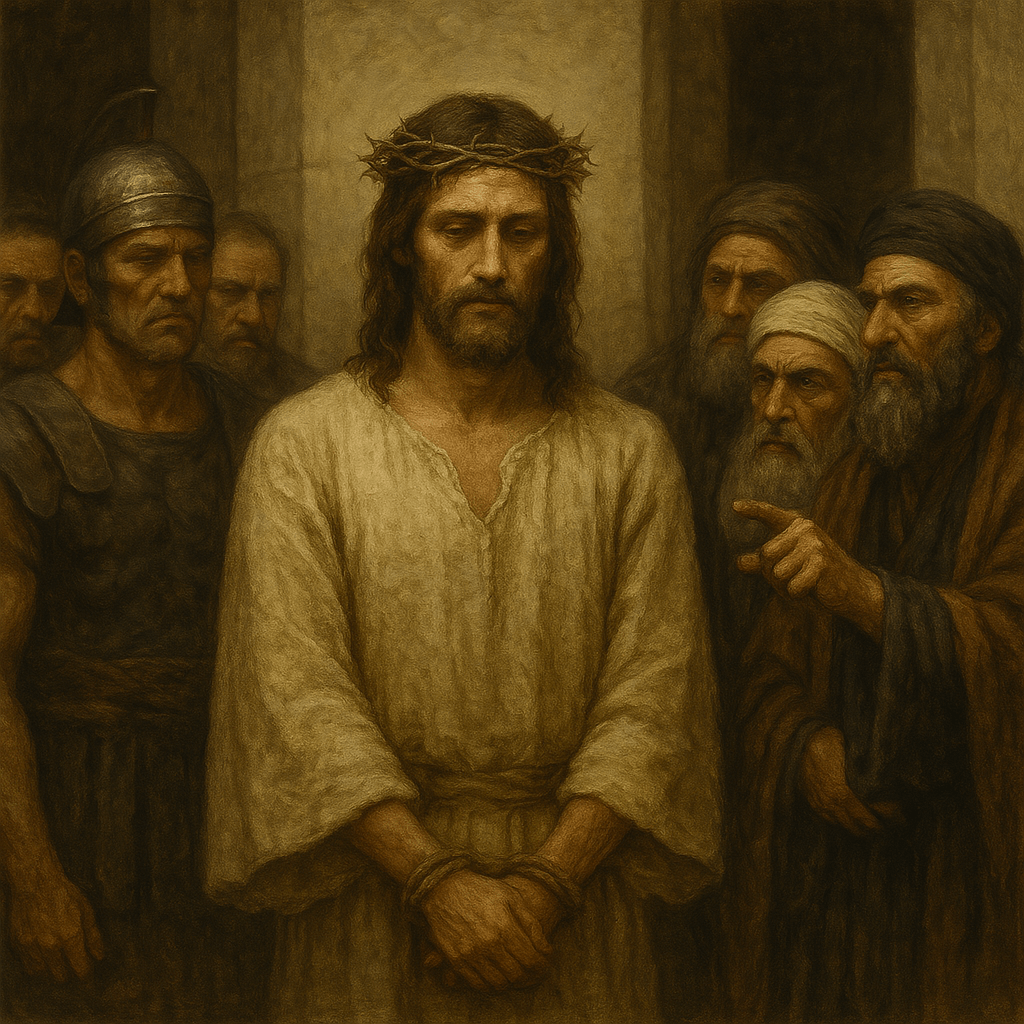
    One example of godly silence is found in Jesus Himself. During His trial, as He was falsely accused and mocked, He remained silent before His accusers (Matthew 26:63). His restraint wasn’t weakness but a demonstration of strength and submission to the Father’s plan. Jesus’ silence speaks of His confidence in God’s sovereignty and His refusal to engage in unnecessary defense or retaliation.

    Keeping our mouths closed is especially important in moments of anger or frustration. Proverbs 10:19 reminds us, “Too much talk leads to sin. Be sensible and keep your mouth shut.” Our emotions can cloud our judgment, leading us to say things that hurt others or dishonor God. In such moments, silence allows us to pause, pray, and seek the Holy Spirit’s guidance.

    There are also times when silence shows respect and wisdom. When someone confides in us or shares a burden, silence can be a gift that communicates empathy and care, rather than offering quick solutions or opinions. Ecclesiastes 3:7 reminds us that there is “a time to be quiet and a time to speak.” Knowing when to remain silent is part of walking in wisdom and love.

    Application
Ask the Holy Spirit to help you identify moments when silence is the best response. Practice being “quick to listen and slow to speak” by pausing before responding, especially in emotionally charged situations. Reflect on Proverbs 10:19, and be mindful of how your words may affect others. In conversations, listen more than you speak, offering silence as a sign of respect and thoughtfulness. Trust God to work in situations where words are unnecessary or might cause harm.

    References

    • James 1:19
    • Matthew 26:63
    • Ecclesiastes 3:7
    • Proverbs 10:19

    Prayer
Lord, teach me to be slow to speak and quick to listen. Help me to recognize the moments when silence is the wisest and most loving response. Guard my tongue from careless or harmful words, and fill me with Your wisdom and patience. May my speech—or silence—reflect Your character and bring glory to Your name. In Jesus’ name, Amen.

  • Widows, Don’t Give Up!

    Widows, Don’t Give Up!

    In seasons of loss, it can feel as though life’s purpose and joy have been stripped away. For widows, the weight of loneliness and grief can be especially heavy. Yet, God sees and cares deeply for widows, offering His comfort and purpose. His Word reminds us that widows have a significant role to play in His Kingdom. Even in the midst of sorrow, God calls widows to continue serving Him, finding renewed purpose in their love for Christ and others.

    Scripture
“A widow who is truly in need and is left all alone puts her hope in God and continues night and day to pray and to ask God for help.” – 1 Timothy 5:5 (NLT)

    Reflection
Paul’s words in 1 Timothy 5:5 point to a beautiful truth: widows who put their hope in God can live lives of extraordinary faith and purpose. When earthly relationships are no longer present, God becomes the ultimate source of comfort, strength, and hope. A widow’s prayers and dependence on the Lord can become a powerful testimony of His sustaining grace.

    Throughout Scripture, widows are honored and encouraged in their faith. Consider the story of Anna in Luke 2:36-38. After becoming a widow early in life, Anna devoted herself to worship, fasting, and prayer in the temple. She became a faithful servant of God, proclaiming the arrival of the Messiah when she saw the infant Jesus. Her life demonstrates that God values faithfulness and uses the seemingly quiet acts of prayer and devotion to advance His Kingdom.

    Widows are not forgotten in God’s plan. Psalm 68:5 calls Him “a defender of widows,” and James 1:27 reminds us that pure religion includes caring for widows in their distress. God honors widows by giving them unique opportunities to serve, whether through prayer, acts of kindness, mentoring younger women, or offering wisdom from their life experiences. These acts of service glorify God and bring joy and purpose to those who feel the weight of grief.

    In serving Christ, widows can experience healing and fulfillment. The act of pouring into others redirects sorrow into meaningful ministry. The Apostle Paul, in Titus 2:3-5, encourages older women to teach and guide younger women, sharing wisdom and modeling godliness. This calling can provide widows with a renewed sense of purpose, knowing their lives still make a difference for Christ.

    Application
If you’re a widow, take time to renew your hope in God and ask Him how He wants to use you in this season. Devote time to prayer, both for your own healing and for the needs of others. Seek opportunities to mentor, encourage, or serve others in your church or community. Trust that God sees you, values you, and has good plans for your life. Lean on His promises, knowing that He is your faithful defender and provider.

    Prayer
Heavenly Father, thank You for Your unfailing love and care for widows. Remind me that You are my hope and my strength. Help me to serve You faithfully in this season, finding joy and purpose in loving You and others. Use my prayers, my experiences, and my life to bring glory to Your name and to bless those around me. Thank You for being my defender, my provider, and my closest friend. In Jesus’ name, Amen.

    References
    • 1 Timothy 5:5 Now the widow who is truly in need and left all alone has put her hope in God and continues night and day in her petitions and prayers.
    • Luke 2:36-38 There was also a prophetess named Anna, the daughter of Phanuel, of the tribe of Asher. She was well along in years, having lived with her husband seven years after her marriage, 37 and then was a widow to the age of eighty-four. She never left the temple, but worshiped night and day, fasting and praying. 38 Coming forward at that moment, she gave thanks to God and spoke about the Child to all who were waiting for the redemption of Jerusalem
    • Titus 2:3–5 (BSB) 3 Older women, likewise, are to be reverent in behavior, not slanderers or addicted to much wine, but teachers of what is good,
      4 so that they can train the young women to love their husbands and children,
      5 to be self-controlled, pure, managers of their households, kind, and submissive to their own husbands, so that the word of God will not be discredited.
    • James 1:27 (BSB) Pure and undefiled religion before our God and Father is this: to care for orphans and widows in their distress, and to keep oneself from being polluted by the world.